 Vi
Vi 
At FV Hospital, Platelet-Rich Plasma (PRP) injections have opened a new treatment pathway, helping hundreds of patients with herniated discs achieve significant improvement without the need for surgery.
As this method uses entirely autologous cells, it minimises common side effects associated with painkillers or corticosteroids, such as hypertension, hyperglycaemia, and osteoporosis.
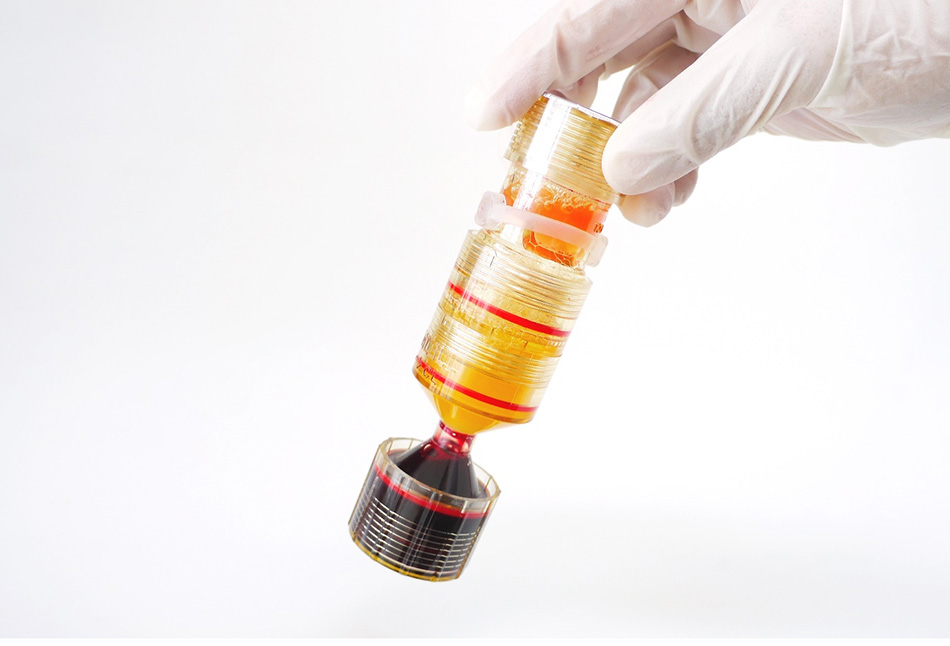
PRP is derived directly from the patient’s own blood. (Source: Pain Clinic FV)
31-year-old man shocked to discover persistent back pain is actually a herniated disc
In August 2025, Mr H.C.T (31, Ho Chi Minh City) began experiencing persistent lower back pain. Due to the nature of his work, which requires prolonged standing, the pain progressively worsened, radiating down both legs and accompanied by numbness and fatigue. These symptoms disrupted his concentration, sleep, and daily activities.
Following examination at FV Hospital, he was diagnosed with lumbar disc herniation at L4–L5 and L5–S1. Fortunately, the level of nerve root compression was mild.
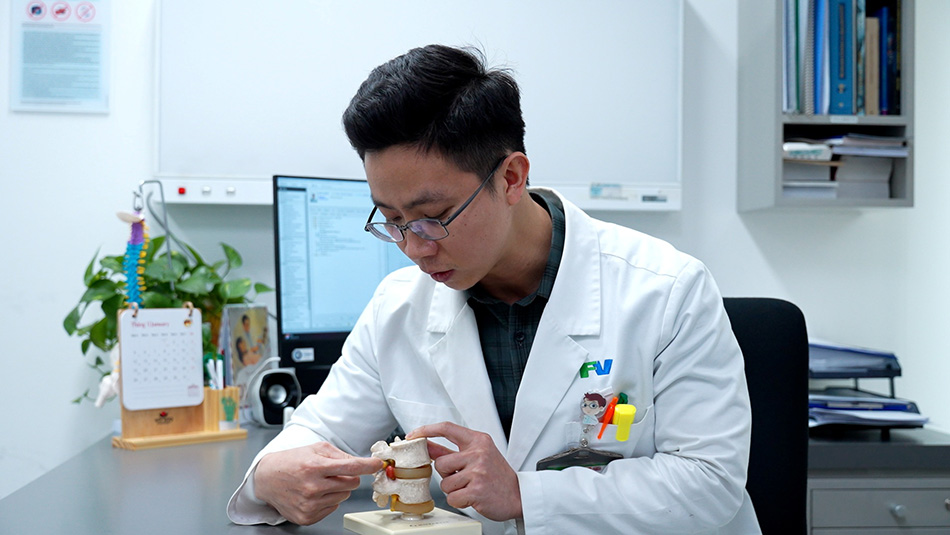
Dr. Pham Hoang Manh, Specialist Level I provides medical counseling on herniated disc conditions. (Source:FV)
According to Dr Pham Hoang Manh, Senior Consultant at the Pain Clinic, FV Hospital, this is a typical case of disc herniation in younger patients, with relatively acute onset and no prior history of trauma or injury.
“Previously, disc herniation was more common among middle-aged or elderly patients. However, we are now seeing a growing number of cases in individuals in their early 30s showing signs of disc degeneration and herniation,” Dr Manh noted.
Treating disc herniation using the patient’s own blood: clear improvement after just two injections
Instead of medication or surgery, FV doctors opted for a conservative treatment approach using autologous PRP injections.
PRP (Platelet-Rich Plasma) is extracted from the patient’s own blood. Approximately 30 ml of blood is collected and centrifuged to isolate plasma with a high concentration of platelets, rich in biological factors that reduce inflammation and support tissue repair at the site of injury.
Unlike conventional pain relief injections that only provide temporary symptom relief, PRP stimulates the body’s natural healing mechanisms directly at the compressed nerve root, offering more sustainable outcomes.
As it uses autologous cells, PRP also reduces the risk of side effects typically associated with analgesics or corticosteroids.
For Mr T., the treatment consisted of just two injections administered two weeks apart. At his follow-up visit in early January 2026, recovery was assessed at approximately 90%. He no longer required a back brace and was able to resume normal physical activity, including lifting heavy objects.
As a healthcare worker himself, his experience as a patient at FV strengthened his confidence in the treatment: “I received thorough counselling with a clear treatment roadmap, which gave me complete confidence to follow the plan.”
Why PRP is a preferred option in conservative treatment of disc herniation?
At the Pain Management Centre, FV Hospital, this method has been applied to hundreds of patients over the past year, showing particularly strong results in younger individuals.
Based on clinical practice, Dr Manh, Specialist level I observes that PRP delivers favourable outcomes, with a lower recurrence rate compared to conventional pain-relief injections.
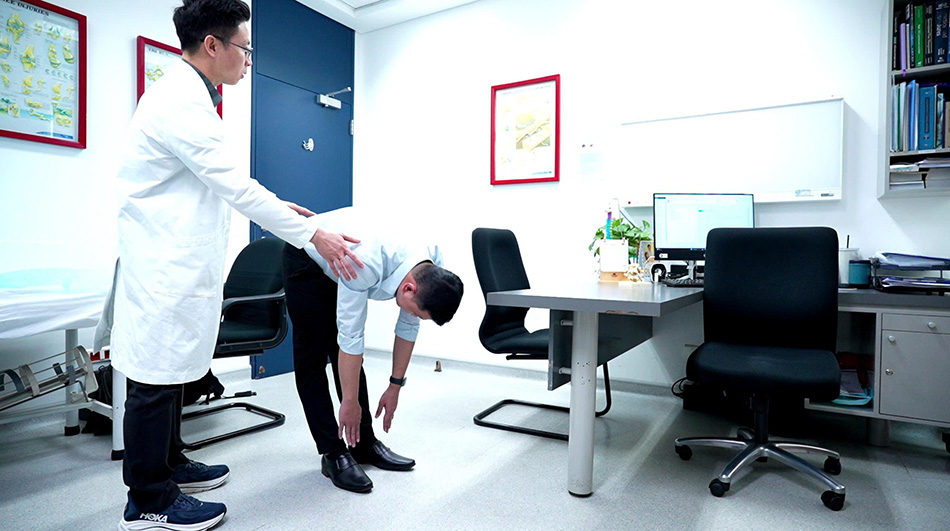
Dr. Manh evaluating a patient’s spinal movement during a post-treatment follow-up. (Source: FV)
PRP has been widely used for years in regenerative medicine, particularly in musculoskeletal conditions, osteoarthritis, tendon injuries, as well as in sports medicine and dermatology.
Patients treated at FV Hospital benefit from personalised treatment plans and comprehensive counselling, ensuring reassurance throughout the treatment journey. Additionally, FV’s multidisciplinary model enables access to various treatment options, aiming for accurate diagnosis and the most effective protocol for each individual case.
Regarding disc herniation, Dr Manh emphasises that not all cases require surgery. For mild to moderate nerve compression, appropriate conservative treatment can yield excellent outcomes, especially in younger patients.
Patients are advised to seek medical attention early if experiencing symptoms such as persistent back pain, radiating pain to the buttocks or legs, or numbness in the lower limbs. Delaying treatment or improper self-management may worsen the condition and reduce the effectiveness of conservative treatment options.
For appointments at the Pain Clinic, FV Hospital:
Hotline: 028 3511 3333
Address: 06 Nguyen Luong Bang Street, Tan My Ward (former District 7), Ho Chi Minh City